
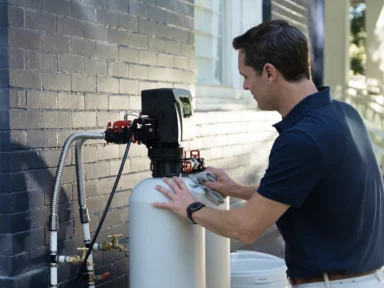
A water softener plays a critical role in controlling mineral buildup inside household plumbing. Many homeowners depend on whole-house water softener systems to maintain steady water quality and prevent scale accumulation in pipes and appliances.
The regeneration cycle allows the system to remove hardness minerals from the resin bed and restore its ability to soften water. When this cycle fails, the softener loses effectiveness, and hard water begins flowing through the plumbing system again.
Many factors can interrupt regeneration. Mechanical issues, electrical failures, blockages, or programming errors may prevent the system from completing the process.
Recognizing the reasons behind regeneration failure helps homeowners maintain proper operation and protect their plumbing infrastructure.
What Regeneration Means in a Water Softener?
A water softener removes hardness minerals using a resin bed that attracts calcium and magnesium ions. As water flows through the tank, these minerals attach to the resin beads.
Over time, the resin becomes saturated with minerals and loses its ability to soften water effectively.
Regeneration restores the resin’s capacity. The system flushes a concentrated salt solution through the resin bed. This process removes the trapped hardness minerals and replaces them with sodium ions.
The cycle typically follows several steps:
- Backwash
- Brine draw
- Resin recharge
- Rinse cycle
- Brine tank refill
If any step fails, the system cannot restore the resin properly, which leads to ongoing hard water problems.
Signs That Regeneration Is Not Occurring
A malfunctioning regeneration cycle often reveals itself through noticeable changes in household water quality.
Several warning signs may appear throughout the home:
- Soap stops lathering properly
- White mineral residue appears on fixtures
- Glassware develops cloudy spots after washing
- Laundry feels stiff after washing
- Water pressure declines in certain fixtures
These symptoms indicate that hard minerals pass through the system instead of being removed.
Prompt attention helps prevent scale buildup from spreading throughout plumbing equipment.
Salt Bridge Formation Inside the Brine Tank
Salt bridges represent one of the most common causes of regeneration failure.
A salt bridge forms when hardened salt crust develops above the water line in the brine tank. This crust blocks contact between the salt and water below.
Without proper salt dissolution, the softener cannot produce the brine solution required for regeneration.
Several factors encourage salt bridge formation:
- High humidity
- Poor salt quality
- Overfilling the brine tank
- Long periods without regeneration
Breaking the salt bridge restores contact between salt and water, allowing the brine solution to form again.
Salt Mush Accumulation at the Tank Bottom
Salt mush represents another issue that disrupts the regeneration cycle.
This condition occurs when salt dissolves excessively and forms a thick sludge at the bottom of the brine tank. The sludge interferes with proper water flow and brine extraction.
Salt mush often develops when:
- Low-quality salt pellets dissolve unevenly
- Excess moisture enters the tank
- Infrequent regeneration allows salt buildup
Cleaning the tank and replacing the salt supply usually resolves the problem.
Timer or Control Valve Malfunction
The control valve directs the regeneration process. It regulates water flow through each cycle stage.
Modern water softeners use programmable electronic controllers or mechanical timers to initiate regeneration.
When the control valve fails or the timer loses accuracy, the regeneration sequence may never begin.
Common causes include:
- Power interruptions
- Internal gear wear
- Programming errors
- Electrical circuit damage
A malfunctioning control valve often prevents the system from switching between operating modes.
Electrical Power Issues
Many water softeners rely on electrical components to control regeneration timing.
Power interruptions may disrupt system settings or stop the timer entirely.
Possible electrical issues include:
- Loose power connections
- Tripped circuit breakers
- Faulty outlets
- Damaged power adapters
Even short power outages may reset system programming, which prevents scheduled regeneration cycles from activating.
Verifying the power supply often resolves unexplained regeneration failures.
Clogged Injector or Venturi Valve
The injector and venturi valve create suction that pulls brine solution from the tank during regeneration.
Mineral deposits, sediment, or debris can clog these components. When this blockage occurs, the system cannot draw brine into the resin tank.
Without brine flow, the resin bed cannot release accumulated hardness minerals.
Signs of a clogged injector may include:
- Regeneration cycles are starting but not completing
- Brine tank water levels are remaining unchanged
- Reduced suction during brine draw
Cleaning these small components restores proper brine flow.
Resin Bed Degradation
Resin beads inside the softener tank perform the actual mineral exchange process. Over time, these beads may degrade or become coated with contaminants.
Chlorine exposure, sediment infiltration, or long-term wear may damage the resin bed.
When resin beads lose their ion exchange ability, regeneration cannot restore softening capacity.
Symptoms of resin degradation include:
- Persistent hard water after regeneration
- Reduced water pressure through the tank
- Resin particles appearing in household water
Replacing the resin restores the system’s softening performance.
Blocked Drain Line
During regeneration, the softener flushes mineral-laden water through the drain line.
If this line becomes blocked or restricted, the system cannot complete the backwash cycle.
Common drain line problems include:
- Kinks in the tubing
- Mineral scale buildup
- Sediment accumulation
- Improper installation
A restricted drain line prevents wastewater from leaving the system, which interrupts the regeneration process.
Regular inspection ensures proper drainage during each cycle.
Incorrect System Programming
Modern water softeners rely on programmed settings that control regeneration timing and water usage calculations.
Incorrect programming may prevent the system from initiating regeneration at the proper intervals.
Settings that require verification include:
- Water hardness level
- Household water usage
- Regeneration frequency
- Time-of-day settings
Incorrect data may cause the system to delay regeneration too long or skip the cycle entirely.
Adjusting the settings allows the softener to operate according to actual water conditions.
Low Water Pressure in the System
Water pressure drives several regeneration stages, including backwashing and rinsing.
Low pressure prevents the system from pushing water through the resin bed effectively.
Possible causes of low pressure include:
- Clogged sediment filters
- Partially closed valves
- Plumbing obstructions
- Supply line restrictions
If water cannot circulate properly during regeneration, the cycle may stop midway or fail.
Air Leaks in the Brine Line
The brine line carries the salt solution from the brine tank to the resin tank.
Air leaks in this line prevent proper suction during the brine draw phase.
Small cracks or loose connections may allow air to enter the line instead of the brine solution.
This issue prevents the system from delivering the salt solution needed to recharge the resin bed.
Tightening connections or replacing damaged tubing restores proper operation.
Sediment Buildup in the Resin Tank
Water supplies sometimes contain sand, silt, or other suspended particles.
Over time, sediment may accumulate inside the resin tank and interfere with water flow.
This buildup can block resin movement during backwash cycles and prevent effective cleaning.
Signs of sediment buildup include:
- Reduced softener efficiency
- Slow regeneration cycles
- Increased pressure resistance inside the system
Installing pre-filtration equipment often reduces sediment accumulation.
Infrequent Regeneration Cycles
Some systems regenerate based on a timer rather than actual water usage.
If the programmed interval remains too long, the resin bed may remain saturated with minerals for extended periods.
This condition allows hard water to pass through the system even though regeneration technically occurs.
Proper regeneration frequency depends on several factors:
- Household water usage
- Hardness level of incoming water
- System capacity
- Number of occupants
Adjusting regeneration frequency helps maintain consistent water softening performance.
Hard Water Bypassing the System
Water softeners often include a bypass valve that allows water to flow around the system during maintenance.
If the bypass valve remains partially open, untreated water may enter the plumbing system directly.
This situation can make it appear as if regeneration has failed.
Verifying the valve position ensures that water flows through the softener rather than around it.
Maintenance Practices That Prevent Regeneration Failure
Consistent maintenance helps keep water softeners operating reliably.
Routine inspection and cleaning reduce the risk of regeneration problems.
Recommended maintenance practices include:
- Monitoring salt levels regularly
- Cleaning the brine tank periodically
- Inspecting control settings
- Checking drain and brine lines for blockages
- Verifying power connections
These tasks help maintain proper system performance and prevent unexpected failures.
Long-Term Impact of Regeneration Failure
When regeneration stops functioning, hard water begins circulating throughout the home again.
This shift may lead to gradual mineral accumulation in plumbing systems and appliances.
Possible long-term effects include:
- Scale buildup in pipes
- Reduced water heater efficiency
- Increased detergent usage
- Mineral deposits on fixtures
- Shortened appliance lifespan
Prompt repair prevents these issues from spreading across the plumbing system.
Keeping Water Softening Systems Operating Properly
Water softener regeneration ensures that the system continues removing hardness minerals from household water supplies. When regeneration fails, mineral buildup quickly returns to plumbing fixtures, appliances, and pipes.
Salt bridges, mechanical malfunctions, clogged components, and programming errors represent common reasons behind regeneration failure. Electrical interruptions or pressure problems may also interfere with the process.
Regular inspection and proper system care help maintain consistent regeneration performance. When each cycle functions correctly, the resin bed remains active and continues protecting plumbing systems from mineral scale buildup.