
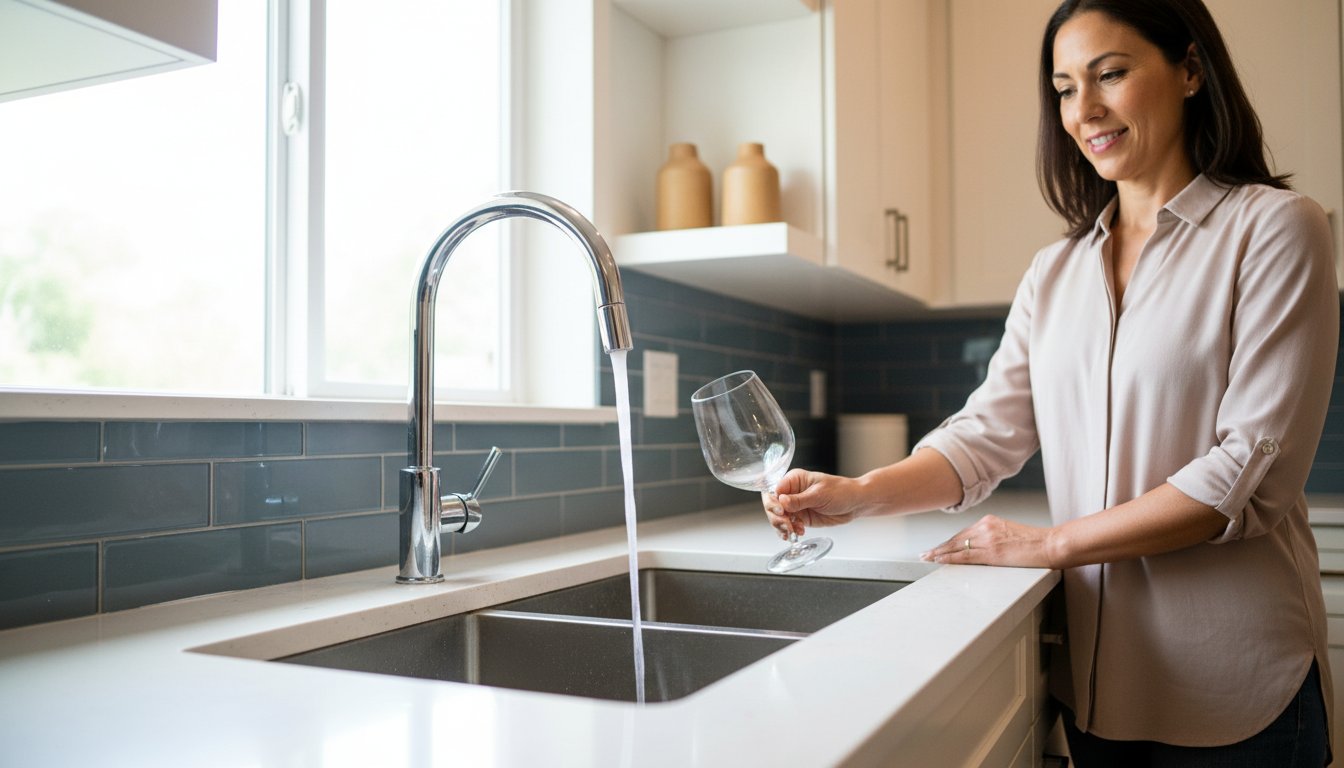
Last Tuesday, a homeowner in the Kings Ridge neighborhood showed me her high-end kitchen faucet, and it was already choked with white, chalky buildup just 14 months after installation. It’s a common sight across North Texas, where our local water supply carries enough mineral content to wear down even the best plumbing fixtures. If you’re tired of scrubbing crusty deposits or dealing with itchy skin, installing a whole house water softener Plano TX is the most effective way to safeguard your investment and your family’s comfort.
You likely already know that Plano’s water is notoriously hard, often measuring over 15 grains per gallon in recent municipal reports. I’m here to show you exactly how to protect your home from these aggressive minerals while keeping your energy bills low. In this 2026 guide, I’ll break down the best softening technologies for our specific region, explain how to get spot-free dishes, and help you find a reliable system at a fair price from a local pro who understands North Texas water. We will look at system sizing, maintenance tips, and the latest filtration trends to keep your home running smoothly.
Key Takeaways
- Understand how water from Lavon Lake impacts your plumbing and why Plano’s specific mineral levels require a tailored protection strategy.
- Learn how a whole house water softener Plano TX can extend the life of your high-end appliances and provide a significant return on your home investment.
- Compare the science behind salt-based and salt-free systems to see which technology truly removes hard minerals from your family’s water.
- Master the “Grain Capacity” calculation to ensure your system is perfectly sized for your family’s bathroom count and daily water usage.
- Discover the benefits of professional North Texas installation and how a no-pressure consultation can solve your hard water issues for good.
Why Plano Homeowners Need a Whole House Water Softener in 2026
Living in Plano means dealing with some of the toughest water in Texas. Your water starts its journey at Lavon Lake. By the time the North Texas Municipal Water District (NTMWD) treats it and sends it through miles of pipes to your tap, it has picked up a heavy load of dissolved minerals. We measure this mineral content in Grains Per Gallon (GPG). Most Plano homes I test show levels between 18 and 20 GPG. To put that in perspective, the Water Quality Association considers anything over 10.5 GPG to be “very hard.” At 20 GPG, your water is “extremely hard.”
Installing a whole house water softener Plano TX isn’t just about avoiding spots on your wine glasses. It’s about protecting your biggest investment. As we move into 2026, our local infrastructure is feeling the weight of decades of growth. Older municipal lines can contribute more sediment and mineral fluctuations than ever before. Taking control of your water quality at the entry point of your home is the only way to ensure your family has the soft, clean water they deserve.
The Impact of North Texas Limestone on Your Pipes
Our North Texas soil is packed with limestone. As rain filters through the ground and into our reservoirs, it dissolves calcium and magnesium. These minerals stay in the water until they reach your home. Scale is the calcified byproduct of North Texas minerals. This scale acts as a silent killer for your plumbing system. It doesn’t matter if you have traditional copper pipes or modern PEX lines; the damage is the same. Over time, scale builds up inside your pipes, narrowing the opening and choking your water pressure. It also coats the heating elements in your water heater, forcing it to burn more energy to heat through a layer of rock.
Plano Water Quality: Beyond Just Hardness
Hardness is only one part of the equation. To keep our water safe from bacteria during its long trip from the lake, the NTMWD uses chlorine and chloramines for disinfection. While these are necessary for public health, they leave a distinct chemical taste and can dry out your skin and hair. Many residents look at EWG reports and feel concerned about local contaminants. There’s no need for fear, but there is a need for a plan.
A softener is the foundation of a healthy home, but it works best when paired with a whole house water filter McKinney TX to address those chemical additives. When you understand how water softening works, you see that it’s a specific chemical process designed to swap hard minerals for soft ones. By combining softening with carbon filtration, you get total protection. You’ll notice the difference immediately in the taste of your coffee, the softness of your laundry, and the health of your skin.
How a Whole House System Saves Your Plano Home Money
Investing in a whole house water softener Plano TX isn’t just a luxury; it’s a strategic financial move for your household. Hard water minerals act like sandpaper on your plumbing and appliances. Over time, these minerals build up and force your systems to work harder, which leads to early failure and expensive repair bills. By removing calcium and magnesium at the entry point of your home, you protect your largest investments from the inside out.
Soft water allows soap and detergents to lather perfectly. You can actually reduce your laundry detergent, dish soap, and shampoo consumption by 50% immediately. This adds up to hundreds of dollars saved on groceries and cleaning supplies every year. Your clothes will also last longer because they aren’t being scrubbed by abrasive minerals in every wash cycle.
Energy efficiency is another major area where you’ll see a return on investment. Scale buildup in a water heater acts as an insulator between the heating element and the water. This means your heater takes longer and uses more gas or electricity to reach the right temperature. Research shows that scale-free water heaters can be up to 24% more efficient than those clogged with North Texas minerals.
Protecting Your Water Heater and Plumbing Fixtures
Scale is the silent killer of tankless water heaters. In North Texas, these high-end systems are incredibly popular but also very vulnerable. Replacing a tankless unit ruined by scale can cost thousands of dollars in labor and equipment. Your Water Guy recommends softening your water before scale reaches a point of no return. Installing a whole house water softener Plano TX ensures that these minerals never have a chance to settle in your heat exchanger.
This protection also extends to the finish on your faucets and showerheads. Matte black and brushed gold fixtures are common in recent Plano remodels, but they are easily ruined by hard water. According to Plano’s official water quality information, the local supply contains significant mineral content that can permanently etch and spot these expensive finishes within months. Soft water keeps them looking brand new without the need for harsh chemical cleaners.
Health and Beauty Benefits for Your Family
Hard water strips natural oils from your skin and hair, leaving them dry and brittle. This often leads to eczema flare-ups or chronic dry scalp issues for many families in our community. When you switch to soft water, you’ll notice a distinct change in how your skin feels after a shower. That signature slippery feel of soft water is simply the absence of soap curd, which is the sticky residue formed when minerals react with soap. Your skin can finally breathe and retain its natural moisture levels. If you want to see exactly what’s in your pipes, I offer a free water test to help you get started on the path to better water.

Salt-Based Softeners vs. Salt-Free Conditioners in North Texas
Choosing a whole house water softener Plano TX families can trust starts with understanding the difference between “softening” and “conditioning.” These two technologies handle minerals very differently. A salt-based system uses ion exchange. This process physically pulls calcium and magnesium out of your water and replaces them with a tiny amount of sodium. When that water hits your skin or your dishes, the minerals are gone. You get that signature “slippery” feel and zero soap scum.
Salt-free systems use Template Assisted Crystallization (TAC). This technology doesn’t actually remove anything. Instead, it changes the chemical structure of the minerals so they don’t stick to your pipes or water heater. While it protects your plumbing from scale buildup, the minerals stay in the water. This means you won’t get the same lathering benefits or the soft feel on your skin that a true softener provides. Maintenance also varies. Salt systems require you to add bags of salt every few weeks, while salt-free units typically need a media change every 3 to 5 years.
In the DFW area, environmental factors matter too. Salt-based systems produce a small amount of brine during their cleaning cycle. This goes down your floor drain. Modern high-efficiency valves now use 40 percent less salt and water during this process compared to older models from the early 2000s. This makes them a much more sustainable choice for our local North Texas water supply.
When to Choose a Traditional Salt-Based Softener
Salt-based systems remain the gold standard because Plano water is notoriously hard. Tests frequently show levels exceeding 20 grains per gallon (GPG). At this level of hardness, only ion exchange can eliminate the white crust on your faucets and the dullness in your laundry. I recommend these for families who want the best possible protection for their appliances and the cleanest feeling skin. A whole house water softener Plano TX homeowners install today uses smart sensors to regenerate only when necessary, saving you money on salt and water bills.
The Case for Salt-Free Water Conditioning
Conditioners are a great fit for townhomes or condos where you might not have a floor drain or enough space for a brine tank. They are excellent at preventing scale in your tankless water heater without using electricity or producing wastewater. Just remember that you’ll still see some spotting on glass shower doors because the minerals are still present. If you want to dive deeper into the technical differences, check out our guide on salt vs. salt-free water conditioners to see which fits your lifestyle.
Buying Guide: Sizing and Features for Your Plano Household
Choosing the right whole house water softener Plano TX homeowners need isn’t about the size of your lot or your total square footage. It’s about how your family actually lives. We’ve seen massive homes with only two residents and small cottages packed with a family of five. The smaller house actually needs a more robust system because the water demand is higher. You want to focus on “Grain Capacity,” which measures how much hardness the unit can remove before it has to regenerate. In Plano, where hardness levels often hover between 15 and 20 grains per gallon, getting this calculation right is the difference between silky water and a system that fails by Friday.
For 2026, don’t settle for outdated technology. Modern systems should include digital valves that learn your water usage patterns to save salt. You also need a dedicated bypass loop, which allows you to turn off the softener for yard watering without cutting off water to the house. We always recommend a “Plano-sized” resin tank. This ensures you have enough softened water in reserve for those high-demand mornings when everyone is showering and the dishwasher is running simultaneously. A tank that is too small will cause “hard water breakthrough,” where minerals slip through the system because the water is moving too fast for the resin to catch them.
Determining Your Daily Water Usage
To find your ideal size, use this simple formula: (Number of People x 75 Gallons) x GPG Hardness. For a family of four in a home with 15 GPG hardness, you’re looking at 4,500 grains of hardness to remove every single day. If you undersize the system, it will regenerate too often, wasting water and wearing out the parts. We suggest consulting with a local water softener company to get a precision test of your specific tap water before you buy.
Installation Logistics: Where Does It Go?
Most Plano homes have two main options for installation: the garage or a utility closet. The garage is usually the winner because it provides easy access for salt delivery and keeps the mechanical sounds away from living areas. You must have access to the main water shut-off and a proper drain line for the regeneration cycle. The “Your Water Guy” approach focuses on clean, professional plumbing integration. We don’t just “hook it up”; we ensure the pipes are routed efficiently to maintain your home’s water pressure and keep the workspace tidy.
Ready to stop guessing about your water quality? Reach out to us today to schedule your free water test and get a custom sizing recommendation for your home.
Professional Installation in Plano: The Your Water Guy Difference
Installing a whole house water softener Plano TX homeowners can trust requires more than a wrench and a generic tutorial. North Texas plumbing often involves complex setups and high-pressure lines that demand professional precision. When you attempt a solo install, you risk improper drainage or bypass leaks that could damage your home’s foundation. We’ve fixed many DIY attempts that went south because of local code nuances. Your Water Guy brings a neighborly approach to every driveway we pull into. We don’t use corporate scripts or high-pressure sales tactics. We focus on your specific needs, whether you’re in a classic home near Downtown Plano or a new build in Legacy West.
Installation day is designed to be as stress-free as possible. Most professional installs take between 3 and 4 hours from start to finish. We don’t just hook up the tank and leave. We perform a post-installation test to ensure the system is stripping away every bit of hardness. Then, we walk you through the controls. You’ll know exactly how to check your salt levels and how the 2026 smart valves operate. We leave your garage or utility closet cleaner than we found it, ensuring your family has immediate access to pure, soft water.
Avoiding the Corporate Markup
Big national franchises often bake massive marketing budgets and middle-management salaries into your final bill. You’re often paying an extra 30 percent just for a brand name you saw on a billboard. Because Your Water Guy is locally owned, we keep our overhead low and our standards high. You get direct access to the technician who actually performs the work. We’ve been serving the North Texas community since day one, treating every home like it belongs to a friend. You aren’t a data point in a national database; you’re our neighbor. This local focus ensures you get better equipment for a fairer price.
Next Steps: Get Your Free Plano Water Test
Ready to see what’s actually flowing through your pipes? Schedule a complimentary on-site analysis to get the facts. We look for three main culprits: hardness minerals, chlorine levels, and Total Dissolved Solids (TDS). Most Plano homes show hardness levels exceeding 18 grains per gallon, which is well into the “very hard” category. We’ll show you the numbers and give you a straight answer on what you need to protect your family. Contact Your Water Guy for a free estimate today!
Protect Your Plano Home and Family Today
Plano water reports consistently show hardness levels reaching up to 18 grains per gallon. This high mineral content acts like sandpaper on your pipes and appliances. By installing a whole house water softener Plano TX, you stop that damage before it starts. You’ll save money on energy bills and extend the life of your dishwasher and water heater by years. We build every system to handle North Texas minerals specifically, ensuring you don’t pay for features you don’t need. As a locally owned business, we skip the corporate markups and high-pressure tactics. You get direct access to expert advice and a system sized perfectly for your household’s unique needs. It’s time to stop fighting scale and start enjoying the soft water your family deserves. We’re ready to help you make 2026 the year your home finally runs smoothly. Let’s get your water right so you can focus on what matters most.
Get Your Free Plano Water Test & Custom Estimate Today!
Frequently Asked Questions
Is a water softener really necessary in Plano, TX?
Yes, it’s a practical necessity because Plano’s water is officially classified as “very hard.” The 2023 City of Plano Water Quality Report shows hardness levels averaging 165 mg/L, which is about 10 grains per gallon. Since the Water Quality Association considers anything over 7 grains hard, your pipes and appliances face constant mineral scale. Protecting your home’s plumbing starts with managing these specific North Texas minerals.
How much does a whole house water softener cost in Plano?
Total costs depend on your home’s size and specific plumbing needs. According to 2024 HomeAdvisor data, homeowners nationally spend between $800 and $3,000 for professional installation. While I can’t give you a final number without seeing your pipes, these figures cover the standard equipment and labor required for most suburban homes. Getting a free water test is the best way to determine your exact requirements.
How often do I need to add salt to my system in North Texas?
You’ll typically need to add one 40-pound bag of salt every 30 to 45 days. A standard family of four in North Texas uses about 40 pounds of salt monthly to process the 10-grain hardness found in local water. Check your brine tank once a month. You want the salt level to stay at least 3 inches above the water line to ensure the system regenerates properly.
Will a water softener affect my water pressure?
A correctly sized system won’t cause a noticeable drop in your household water pressure. We select a whole house water softener Plano TX based on your home’s peak flow rate, usually aiming for 12 to 15 gallons per minute. This capacity ensures you can run the shower and the dishwasher simultaneously without a struggle. If you notice a drop of 5 psi or more, it’s usually a sign the resin bed needs cleaning.
Can I install a water softener in a Plano rental home?
You can definitely enjoy soft water in a rental, but you need a non-permanent installation. With roughly 42 percent of Plano residents renting their homes, many landlords allow systems that connect to existing plumbing loops. Always get written consent from your property manager before starting. I can help you choose a rental-friendly model that’s easy to disconnect and move when your lease ends in 12 months.
What is the difference between a water softener and a water filter?
Softeners specifically target mineral buildup, while filters remove chemical contaminants. A whole house water softener Plano TX uses ion exchange to pull out calcium and magnesium that cause scale. In contrast, a carbon filter removes the chlorine taste and smell common in DFW water. Many local families choose a hybrid system that handles both jobs, giving you water that’s both soft on skin and great for drinking.
How long does a typical water softener system last in DFW?
Most high-quality systems in the DFW area last between 10 and 15 years. The lifespan depends heavily on the resin quality because North Texas water often has chlorine levels reaching 4.0 ppm. I recommend using 10 percent cross-linked resin because it resists chlorine damage better than the cheaper 8 percent options. Regular annual maintenance can help you push that lifespan toward the 20-year mark.
Does the City of Plano recommend water softeners?
The City doesn’t officially recommend or discourage them, but they provide the data you need to decide. Their official water reports confirm hardness levels between 150 and 180 mg/L. They provide these numbers specifically so residents can calibrate their own water softeners. While the city ensures the water is safe to drink, they leave the choice of mineral management up to individual homeowners.